Convenience Stores in Japan: The Small Everyday Infrastructure of Japanese Life
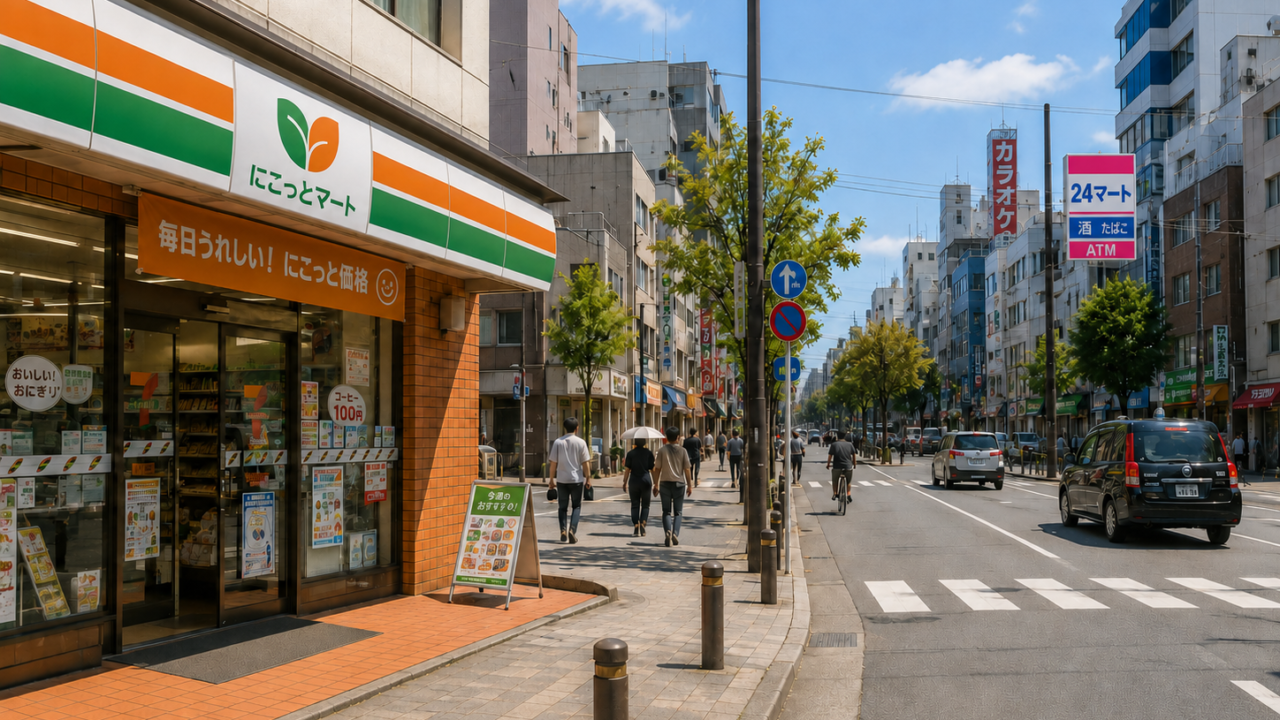
When you walk around Japan, one of the first things you notice is how often you see convenience stores.
They are in front of major train stations, inside office districts, near schools and universities, along residential streets, inside railway stations, beside highways, in regional towns, and even in quiet rural areas surrounded by fields. The atmosphere changes from place to place, but the role is the same: the convenience store is deeply connected to everyday life in Japan.
According to the Japan Franchise Association’s April 2026 convenience store statistics, the seven major convenience store operators in Japan had 56,125 stores nationwide. Their total monthly sales reached 982.618 billion yen, and the total number of customer visits for that month was 1.33709 billion. In other words, convenience stores in Japan are not just “common shops.” They are points of everyday contact used more than a billion times a month.
A Small Store Packed with Goods and Services
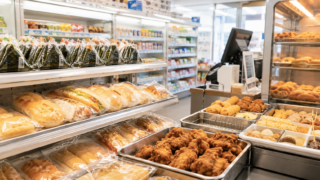
The special feature of a Japanese convenience store is that so many goods and services are packed into a relatively small space. A typical store may sell rice balls, sandwiches, bento meals, noodles, salads, fried chicken, desserts, coffee, tea, soft drinks, alcohol, snacks, magazines, stationery, cosmetics, masks, medicine-related daily items, umbrellas, socks, batteries, chargers, and small household goods. It may also have an ATM, a copy machine, a ticket machine, a parcel-shipping counter, and a system for paying utility bills.
Seven-Eleven Japan’s 7NOW delivery service, for example, says customers can choose from about 3,000 items available in-store and have them delivered to a specified location. That number gives a sense of how much a single Japanese convenience store can contain. It is not a large supermarket, but it quietly carries a surprisingly wide range of everyday needs.
The services are just as important as the products. At some convenience stores, people can pay electricity, gas, water, phone, and tax bills. They can use ATMs, print documents, copy forms, buy event tickets, send parcels, or receive certain goods through store services. Yamato Transport, one of Japan’s major delivery companies, states that parcels can be sent from several convenience store chains, including 7-Eleven, FamilyMart, NewDays, Daily Yamazaki, and Poplar, although some services are limited.
This is why a Japanese convenience store is hard to explain with the word “shop” alone. It is part grocery store, part fast-food counter, part café, part bank corner, part copy shop, part ticket office, part parcel desk, and part emergency supply station.
The Shelves Keep Changing
And the shelves do not stay the same.
Convenience stores in Japan are constantly changing. New products appear every week. Seasonal sweets, limited-edition drinks, collaboration snacks, character goods, hot foods, cold noodles, desserts, and regional products come and go quickly. The store may be the same building, but the inside keeps moving.
This movement is closely connected to the Japanese calendar.
At New Year, convenience stores sell osechi-style meals and seasonal foods. Around Setsubun in February, they promote ehōmaki, a long sushi roll eaten in a lucky direction. In March, there are products connected with Hinamatsuri, the Doll Festival. In spring, strawberry fairs appear everywhere. In July, stores may display items connected with Tanabata. In October, Halloween sweets and decorations fill the shelves. In December, Christmas cakes, fried chicken, party foods, and winter desserts appear.
A convenience store does not only follow Japanese life in space. It follows Japanese life in time.
Convenience Stores by Time of Day
In the morning, office workers and students stop by for coffee, rice balls, sandwiches, bread, or bottled tea before work or school. Around noon, people buy bento meals, pasta, noodles, salads, soup, or desserts. In the late afternoon, students, workers, and parents stop in on the way home. At night, people buy drinks, snacks, ice cream, daily goods, or a simple dinner. Late at night, the convenience store becomes a place where ordinary life is still available after most other places have closed.
Convenience Stores by Place
The role of the convenience store also changes depending on location.
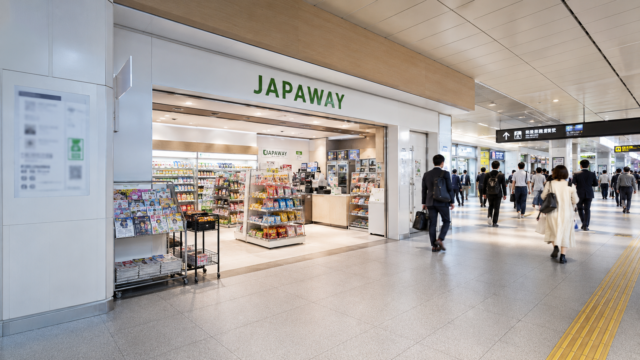
In a big city, a convenience store is part of the speed of commuting, working, studying, and moving between appointments. In a railway station or near a station gate, the most important thing is speed: buy something quickly and get on the train. In an office district, the store supports the workday through lunch, coffee, printing, ATMs, bill payments, and small supplies. In a residential area, it becomes a nearby place for small daily purchases. In a rural area or farming district, where other shops may be far away, it can become a compact center for food, daily goods, banking access, delivery services, and small errands.
Convenience Stores Inside Hospitals
And not only in cities, suburbs, or rural areas. In Japan, convenience stores can also be found on the first floor of large hospitals.
This may be surprising to visitors from other countries. A convenience store inside a hospital does not only sell drinks, bento meals, and snacks. It may also sell masks, toothbrushes, underwear, towels, slippers, stationery, and small daily items needed during a hospital stay. Patients, family members staying with them, people visiting someone in the hospital, doctors, nurses, and hospital staff may all use the same store.
In that setting, the convenience store is no longer just a useful shop on the street. It becomes a small infrastructure of daily life inside a closed and often anxious space. The hospital is not an ordinary place. People are waiting for tests, visiting family members, preparing for surgery, working long shifts, or looking for something they suddenly need. In that situation, being able to buy a warm drink, a rice ball, a towel, a toothbrush, or a familiar dessert can become a small but real comfort.
More Than a Place to Buy Onigiri
This is one of the reasons Japanese convenience stores feel so unusual to many foreign visitors. At first, they may notice the food. The rice balls are good. The sandwiches are neat. The fried chicken is surprisingly tasty. The pudding and desserts are better than expected.
But after a while, they begin to see something else.
The Japanese convenience store is not just a place to buy onigiri. It is one of the small systems that keeps everyday life running.
It appears where people live, work, travel, study, wait, commute, visit, recover, and return home. It follows the morning rush, the lunch break, the evening commute, the late-night hunger, the seasonal event, the sudden errand, the hospital stay, and the rural shopping need.
A Clear Window into Japan Life Now
If you want to understand daily life in Japan, a convenience store is a good place to begin.
Not because it is traditional.
Not because it is beautiful.
Not because it is famous.
But because it is used.
A Japanese convenience store shows how modern Japan organizes small needs, short moments, public services, seasonal habits, food culture, and everyday comfort into one bright, compact space.
It is one of the clearest windows into Japan life now.
Sources
- Japan Franchise Association convenience store statistics, April 2026
- Seven & i Holdings: Shopping Support / 7NOW
- Yamato Transport FAQ: sending parcels from convenience stores