Convenience Stores Inside Japanese Train Stations: What People Buy Before Work and School
Convenience Stores Inside Train Stations: Small Shops That Support People on the Move
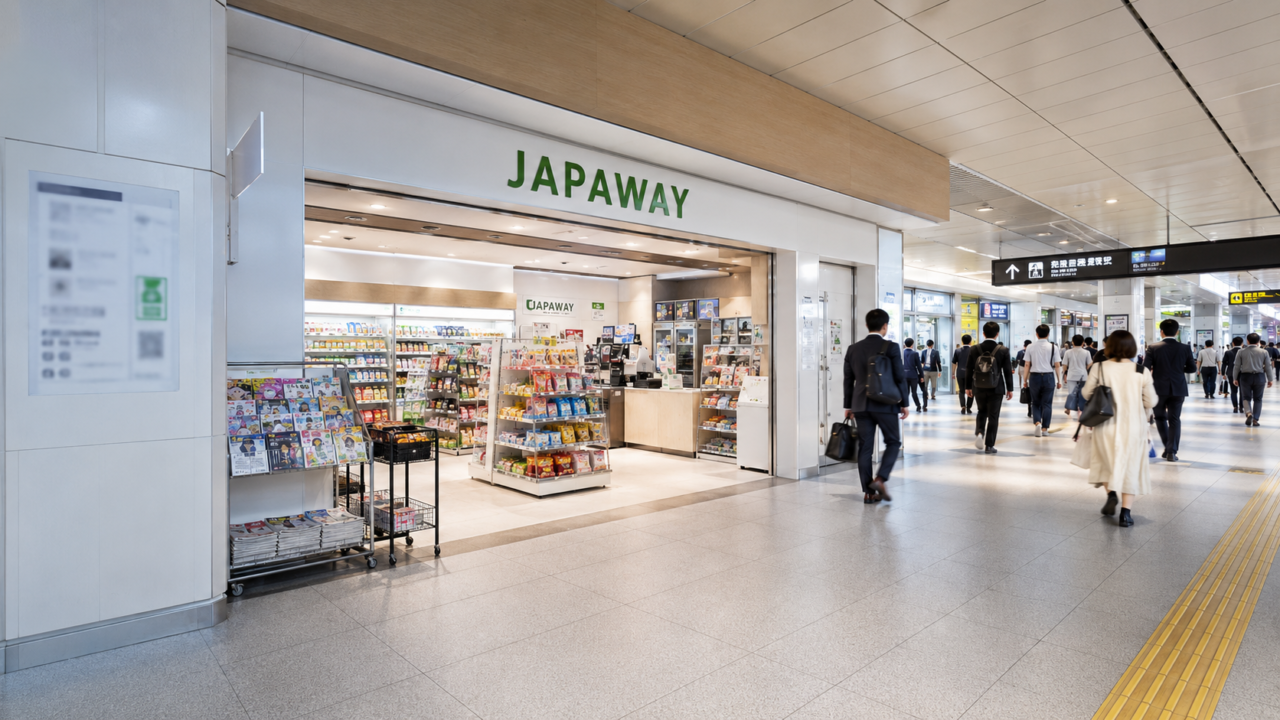
Inside Japanese train stations, there are sometimes convenience stores. They may be inside ticket gates, along station passageways, in concourses, or on the way to train platforms. They are placed where people naturally move through the station.
Convenience stores inside train stations are used differently from convenience stores on ordinary streets. They are not mainly places where people buy things to take home and use for several days. The items bought there are usually things people need right there, things they use while moving, or things they will need soon after arriving at work or school.
They are especially crowded during the morning commuting and school hours. From around 7:30 to 8:30 in the morning, businesspeople and students gather at stations all at once. During this time, people often buy rice balls, sandwiches, bread, bottled tea, canned coffee, energy drinks, gum, throat lozenges, masks, and folding umbrellas at convenience stores inside stations.
Customers do not spend a long time choosing products. They check the train time, take what they need from the shelves, and go to the register. For payment, transportation IC cards and smartphone payments are often used more than cash. The whole shopping time may be only a few dozen seconds to a few minutes.
Convenience stores inside stations are sometimes smaller than ordinary convenience stores on the street. But being small does not mean they are inconvenient. The range of things people buy inside stations is relatively clear. The main products are things to eat right there, things to drink while moving, things to use at work or school, and things needed soon after arrival. Even with limited shelf space, the store can work well if it has the items people need in that situation.
Rice balls, sandwiches, bread, bottled tea, coffee, and energy drinks are used as breakfast, light meals, drinks while traveling, or food to keep people going until lunch. Some people buy them to eat after arriving at work or school. These are not large shopping trips. They are purchases that support the next few hours of activity.
Products for businesspeople are also noticeable. These include gum to fight sleepiness, mint tablets, products for freshening the breath, throat lozenges, masks, pocket tissues, and small hygiene items. These are useful before getting on the train, before arriving at work, before a meeting, or before meeting someone. A convenience store inside a station does not only sell food. It also helps people prepare for the immediate situations they are about to enter.
The way products are placed also shows the character of a store inside a station. Drinks and light meals that are easy to pick up are often placed near the entrance. Rice balls and sandwiches are placed where people can choose them easily. Near the register, there may be small items such as gum, throat lozenges, mint tablets, and energy drinks that are easy to buy together with other products.
When foreign visitors see a convenience store inside a Japanese train station, it may first look like just a small shop. But during the morning rush hour, its role becomes easier to understand. A convenience store inside a station is made so that people moving through their commute or school route can quickly buy what they need.
If a convenience store on an ordinary street supports neighborhood life, a convenience store inside a station supports how people maintain themselves within a public social space.
Morning convenience stores inside stations show the speed of urban life in Japan very clearly. People are in a hurry. Train times are fixed. In that situation, people buy food, drinks, and small items needed for work or school in a short amount of time.