Where to Eat Japanese Soba: Soba Shops, Tempura Soba, and Hitachi Aki Soba
I am Japanese, and I live in Japan.
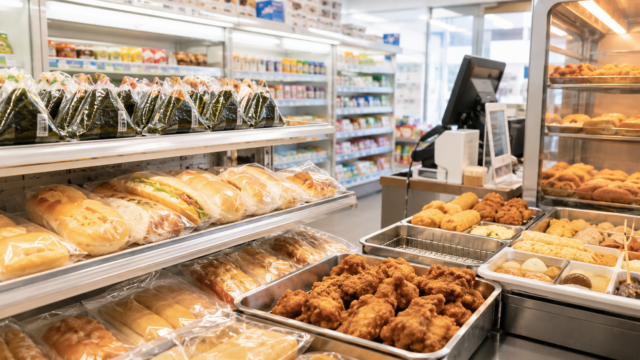
In Japan, there are many places where you can eat soba. You can find it at soba restaurants, convenience stores, supermarkets, food courts in large supermarkets, roadside stations, and other places.
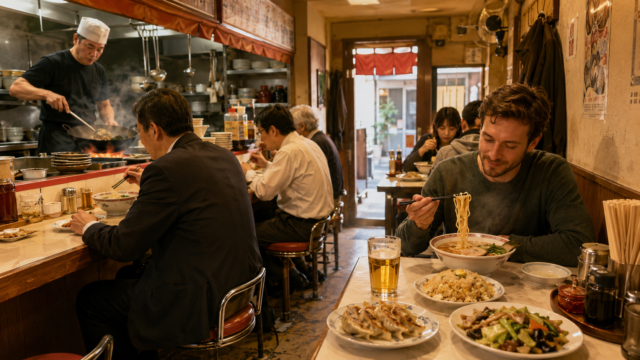
But if you want to really taste Japanese soba, I recommend going to a proper soba restaurant.
To put it quite strongly, for Japanese soba, a soba restaurant is the best choice.
Japanese soba is about the taste of buckwheat
The appeal of Japanese soba is not just that it is a thin noodle dish.
It is about the aroma of buckwheat. The texture of the noodles. The dashi flavor of the dipping sauce or soup. The way it goes with condiments such as green onion and wasabi.
You can buy soba at convenience stores and supermarkets. You may also find it at food courts in large supermarkets.
That does not mean those versions are bad. They are cheap, quick, and convenient, and they can be useful as an everyday meal.
However, if you want to feel, “This is what Japanese soba tastes like,” they may be a little weak.
In cheaper soba, the proportion of wheat flour can be higher than the proportion of buckwheat flour. When that happens, the aroma and flavor of buckwheat become weaker.
The sauce also makes a difference.
At soba restaurants, the dipping sauce or soup often has a strong dashi flavor, usually made with ingredients such as bonito flakes. Convenience store or supermarket soba sauces are made to be convenient and easy to eat, but the depth of dashi is different from what you find at a soba restaurant.
With cold soba, the difference between shops becomes clearer
Even with hot soba, there is a difference between proper soba from a soba restaurant and simpler soba from other places.
The aroma of the buckwheat, the texture of the noodles, and the flavor of the soup. At a good soba restaurant, you can feel the difference even when the soba is served hot.
But that difference becomes even more decisive with cold soba, such as mori soba or zaru soba.
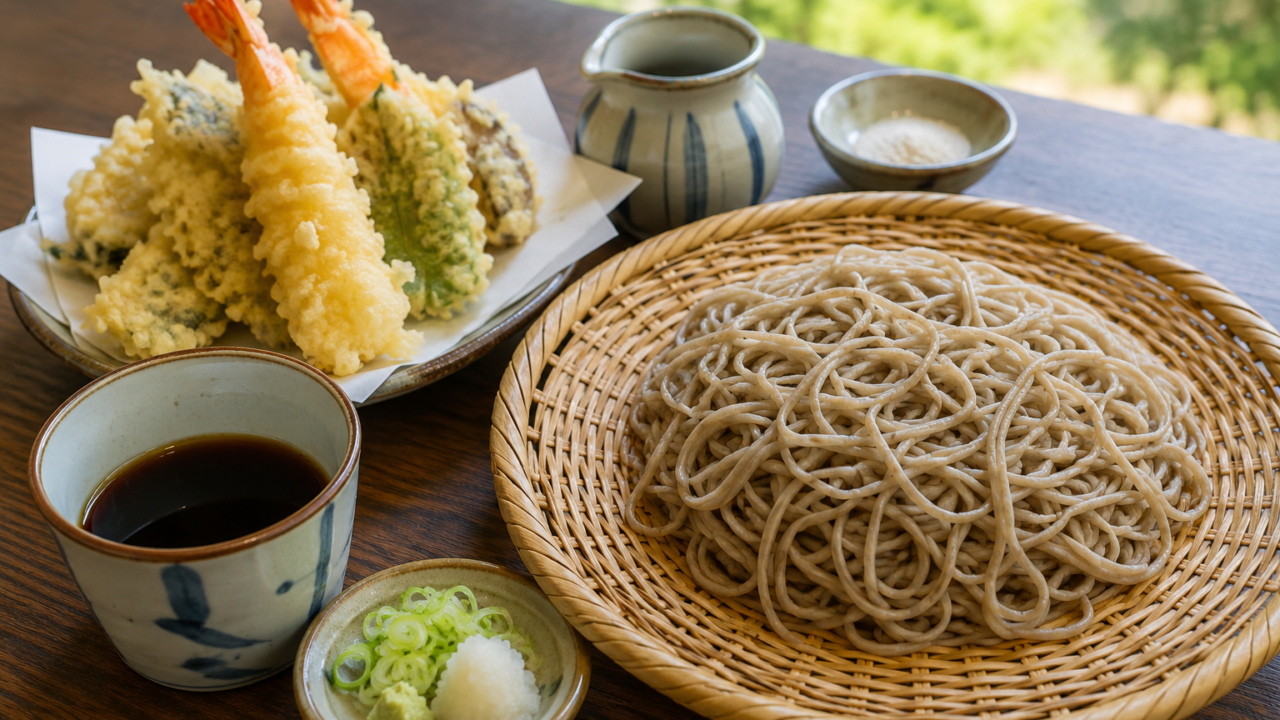
Cold soba brings the taste of the noodles themselves to the front. The aroma of the buckwheat, the firmness of the noodles, the smooth feeling as you eat them, and the strength of the dashi in the dipping sauce are harder to hide.
So when you compare cold soba with cold soba, the difference between soba from a soba restaurant and easy soba from a convenience store or supermarket can feel quite large.
Cold soba makes the taste of soba itself very visible. That is one reason why eating it at a proper soba restaurant matters.
Soba-yu is another pleasure at soba restaurants
When you eat cold soba at a soba restaurant, you may be served soba-yu at the end.
Soba-yu is the hot water used to boil the soba noodles.
After finishing the noodles, you pour soba-yu into the remaining dipping sauce and drink it. The strong sauce becomes softer, and you can enjoy the dashi and the aroma of soba until the end.
This is something you do not usually experience with soba from a convenience store or supermarket.
Japanese soba is not only about the noodles. The final soba-yu is also part of the meal.
If you want tempura soba, a soba restaurant is even better
If you like tempura and want to eat tempura soba, the reason to choose a soba restaurant becomes even stronger.
At a soba restaurant, tempura is often fried after you order it. A professional cook controls the temperature of the oil and the frying time to make it just right.
That is why the batter is less likely to become heavy with oil. It is crisp, not sticky or soggy. The flavor and texture of the ingredients also remain clear.
You can also buy soba with tempura at convenience stores or supermarkets. But after some time passes, the tempura batter tends to absorb oil and become soft.
If you want to enjoy tempura soba properly, a soba restaurant is a much better choice.
In soba-producing areas, roadside stations and local supermarkets may also be good
If you want to taste Japanese soba properly, a soba restaurant is usually the first place to consider.
However, there are some exceptions.
If you visit a mountain area or a region known for soba, pay attention to roadside stations.
A roadside station, or michi-no-eki, is a rest facility for people traveling by car, but many of them also serve local food and regional dishes. In areas where soba is commonly eaten, you may unexpectedly find good soba at a roadside station restaurant or snack corner.
In such regions, even the food court of a local supermarket may serve soba.
This is different from a food court in a large urban supermarket. In soba-producing regions, soba may be treated as a local specialty.
If you stop at a roadside station or a local supermarket during your trip and see soba on the menu, it may be worth taking a closer look.
In the Kanto area, I often eat Hitachi Aki Soba from Hitachiota
I live in the Kanto area, so one kind of soba I often eat is Hitachi Aki Soba from Hitachiota in Ibaraki Prefecture.
Hitachi Aki Soba has a good aroma and a clear buckwheat flavor. It feels light and clean, but it also has richness and depth.
In that area, you can sometimes eat good soba not only at soba restaurants, but also at roadside stations.
If you want cold soba with tempura, you may find tenseiro soba. If you prefer hot soba, you may find hot tempura soba.
Both are ways to enjoy soba together with tempura.
When the soba is made with 100 percent Aki Soba buckwheat, the flavor of the buckwheat itself becomes very clear. It is different from soba from a convenience store or supermarket. You can really feel, “Ah, I am eating soba.”
At roadside stations, you may also find desserts made with soba. For example, soba ice cream.
It has a simple and interesting flavor, with a slight roasted aroma from the soba.
If you are interested, you can look for
Michi-no-Eki Hitachiota Komon-no-Sato
This English guide page is useful for checking the location and basic information.
There is also the official page for
Mugen, the soba restaurant at Michi-no-Eki Hitachiota
but it is mainly in Japanese.
Aki Soba reminds me of the rural scenery of my childhood
When I was a child, soba was not as expensive as it often is now.
It was more of an ordinary, inexpensive food that people ate in everyday life.
Today, soba made with 100 percent buckwheat flour can sometimes feel like a high-end food. But for me, that kind of soba is closer to the taste I knew when I was young.
So when I eat Hitachi Aki Soba, I remember the rural scenery of my childhood.
Wide rice fields and vegetable fields. Low mountains in the distance. A landscape where time seems to move slowly.
That scenery feels a little like the countryside in My Neighbor Totoro.
Soba is not just a noodle dish. It can quietly carry the land, old everyday life, and childhood memories.
When you eat Japanese soba, try to feel not only the taste, but also a little of the air of the place. A bowl of soba you find during a trip may bring the scenery of rural Japan a little closer to you.