What to Buy at a Japanese Convenience Store: Local Food Tips
I am Japanese, and I live in Japan.
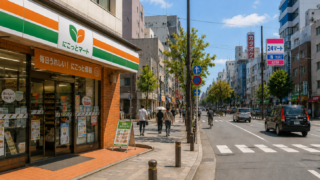
In my everyday life, I naturally choose between convenience stores — especially the three major chains, 7-Eleven, Lawson, and FamilyMart — supermarkets, fast food restaurants, and takeout bento shops such as Hokka Hokka Tei and Hotto Motto.
So I do not think, “Japanese convenience stores are amazing for everything.”
They are certainly very convenient. They sell many foods that are easy to eat, the taste is usually stable, and there are convenience stores almost everywhere.
But depending on the food, a supermarket may be better. A takeout bento shop such as Hokka Hokka Tei or Hotto Motto may be more satisfying. Sometimes fast food is the better choice.
Still, there are some foods that I personally think are really worth buying at a convenience store, especially at major chains like 7-Eleven, Lawson, and FamilyMart.
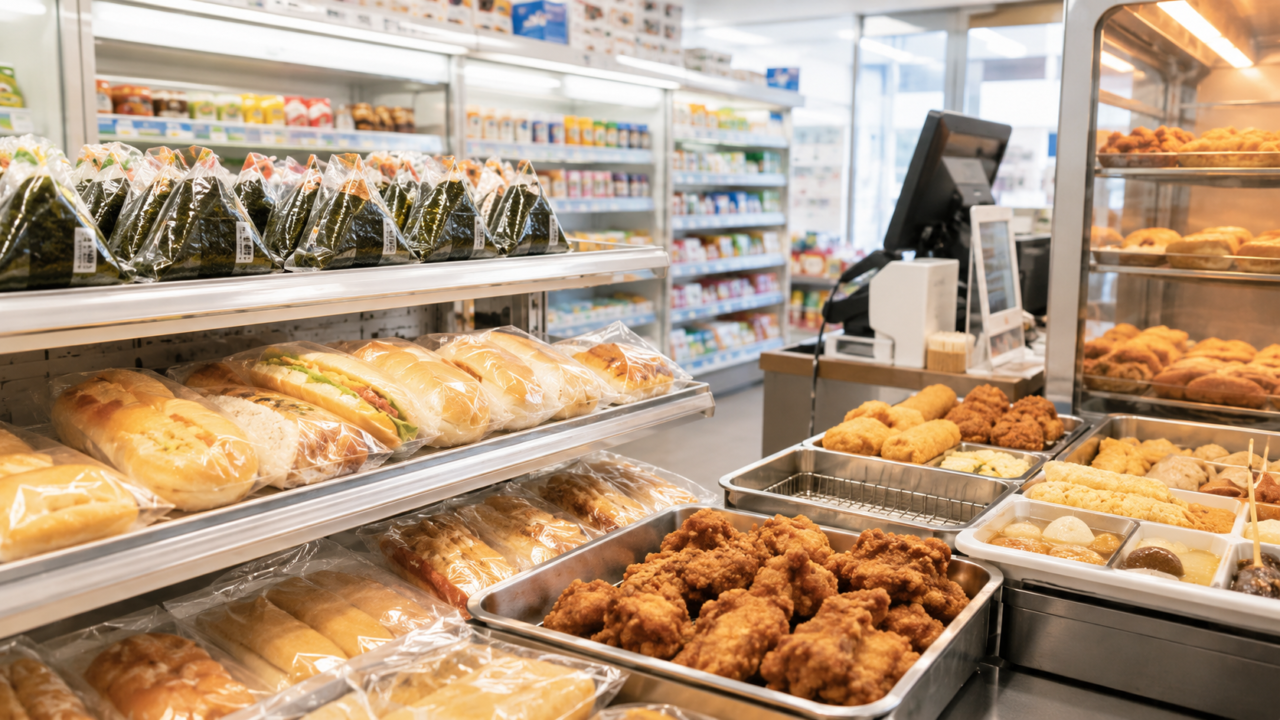
For me, those are onigiri, bread, steamed buns, fried foods near the register, and oden.
Onigiri shows the real strength of Japanese convenience stores
If you try one food at a Japanese convenience store first, I recommend onigiri.
Onigiri is one of the most well-made convenience store foods in Japan. It is not too expensive, you can eat it with one hand, there are many kinds, and it works for breakfast, lunch, or a light dinner.
There are many fillings: salmon, tuna mayonnaise, pickled plum, kombu seaweed, spicy cod roe, and more. There are also types where the rice itself is seasoned, like mixed rice or flavored rice. Those are also good.
But if you are trying convenience store onigiri for the first time, I especially recommend the simple type with white rice and seaweed.
The reason is simple: you can clearly taste the rice and the nori.
The texture of the rice, the gentle saltiness, and the smell of the seaweed. This combination feels very Japanese to me.
In particular, the type where you open the package and wrap the seaweed around the rice yourself is a very convenience-store-like experience in Japan. The smell of the nori and the softness of the rice go very well together.
It is cheap, light, very Japanese, and usually quite good. When you are not sure what to buy at a convenience store, onigiri is a safe first choice.
Convenience store bread is also very good
The next thing I recommend is bread.
Japanese convenience store bread is not just cheap bread. The bread dough itself is often surprisingly good.
Many breads are soft, moist, and slightly chewy. Whether it is sweet bread or savory bread, the texture of the dough is usually pleasant.
Japanese bread is a little different from firm European-style bread. It is often softer, lighter, and easier to eat.
For sweet bread, you will find melon bread, Danish-style pastries, cream-filled bread, and many other kinds. Crunchy sweet bread is also good. It is sweet, but the baked dough sometimes has a slight roasted bitterness, which makes it more interesting than just being sugary.
For savory bread, I recommend bread with a frankfurter sausage inside.
This kind of bread is very useful as a light meal. It is not sweet, but it is not too heavy either. When you want something a little more like a meal, it is a good choice.
Japanese convenience store bread is often better than you might expect for the price. It is good for breakfast or a light snack.
Sandwiches are fine at either convenience stores or supermarkets
Sandwiches are also common at convenience stores.
You will find egg sandwiches, ham sandwiches, tuna sandwiches, mixed sandwiches, pork cutlet sandwiches, and more. Japanese convenience store sandwiches are soft, easy to eat, and usually taste stable.
However, I do not think sandwiches are always better at convenience stores.
Convenience store sandwiches are good and reliable. But supermarket sandwiches are not necessarily worse. Depending on the shop, a supermarket sandwich may be cheaper and tastier.
So for sandwiches, I think it is better to choose the shop that is nearby.
Buying them at a convenience store is fine. Buying them at a supermarket is also fine.
Unlike onigiri or bread, sandwiches do not always have a strong reason to be bought specifically at a convenience store.
Steamed buns are a good convenience store choice
For steamed buns such as nikuman, pizza-man, and anman, I think convenience stores are a good choice.
The biggest reason is that you can buy them warm.
Nikuman is a soft steamed bun filled with meat and vegetables. Pizza-man has tomato sauce and cheese, so it may be easy to try even if you are not used to Japanese flavors. Anman is filled with sweet red bean paste, so it is more like a warm sweet snack.
Most of them are easy to enjoy, and it is hard to make a very bad choice.
They are warm, not too expensive, and ready to eat. This is one area where convenience stores are stronger than supermarkets.
Fried chicken and other hot snacks near the register are also worth trying
At Japanese convenience stores, especially major chains like 7-Eleven, Lawson, and FamilyMart, you will often see fried foods near the register.
Fried chicken, karaage, nuggets, croquettes, minced meat cutlets, and similar foods are common.
These are very useful when you want something small but satisfying. Many of them are fried in the store, and if they have not been sitting there too long, they can be quite good.
Chicken items especially have different styles depending on the convenience store chain. 7-Eleven, Lawson, and FamilyMart each have slightly different flavors and textures.
If you add one fried chicken item to onigiri or bread, it can become a fairly satisfying light meal. For example, one onigiri and one piece of fried chicken can be a cheap and satisfying snack or small meal.
If you like oden, convenience stores are a good option
If you like oden, convenience stores can be a very good option.
Oden is a Japanese dish made by simmering ingredients such as daikon radish, eggs, konnyaku, chikuwa fish cake, and other items in dashi broth. In colder seasons, it is sometimes sold near the register at convenience stores.
You can buy oden ingredients at supermarkets too. But if you want to buy just a small amount, already cooked and ready to eat, convenience stores are very convenient.
It is also a good way to try Japanese dashi flavor casually. If you are trying it for the first time, daikon, egg, and chikuwa are easy choices.
However, not every store sells oden, and it depends on the season and the region. If you find it, it is worth trying.
For curry rice, a takeout bento shop may be better
On the other hand, there are also foods that I do not necessarily recommend buying at a convenience store.
One example is curry rice.
Convenience store curry is not bad. If the staff heats it up for you, you can eat it right away, and the taste is usually stable.
But if I want to eat curry rice as a proper meal, I often choose a takeout bento shop such as Hokka Hokka Tei or Hotto Motto instead.
When you think about the amount of rice, the amount of curry sauce, the warmth, and the overall satisfaction as a meal, curry from a bento shop may be better.
If you want a full meal rather than a light snack, it is worth checking other options outside the convenience store.
For katsudon, supermarkets are also worth checking
Katsudon is another food where supermarkets may be a better choice.
In the prepared-food section of supermarkets, you can often find katsudon, oyakodon, tendon, and other rice bowls. In the evening, they may also be discounted, so you can sometimes buy them cheaply.
Depending on the supermarket, the taste may feel more homemade and satisfying. Of course, it depends on the store, but for katsudon, I would not think “convenience store only.”
If you want katsudon, it is worth checking whether there is a supermarket nearby.
Choose the foods that convenience stores are good at
Japanese convenience stores, especially the three major chains — 7-Eleven, Lawson, and FamilyMart — are very useful. But that does not mean you should buy every kind of food there.
In my experience, convenience stores are especially good for onigiri, bread, steamed buns, fried foods near the register, and oden.
Onigiri shows the quality of the rice and seaweed. Bread is often soft, moist, and pleasantly chewy. Steamed buns and fried foods are attractive because they are warm or close to freshly made. Oden is an easy way to enjoy Japanese dashi.
On the other hand, for rice dishes like curry rice and katsudon, I also consider supermarkets or takeout bento shops such as Hokka Hokka Tei and Hotto Motto. For sandwiches, both convenience stores and supermarkets are usually fine.
If you want to choose cheap, tasty, and low-risk light food in Japan, start by looking at onigiri and bread at a convenience store.
The good thing about Japanese convenience stores is not only that they are convenient. If you choose the right kind of food, you can find a very satisfying light meal.